
Automatic vs Manual Driving Lessons in Abingdon: Which Should You Choose in 2026?
September 29, 2026
How Many Driving Lessons Do I Need to Pass in Oxford? (2026 Guide)
How many driving lessons do I need?
It is usually the first question a new learner asks, and the answer shapes your budget, your test date and which lesson package makes sense.
The official advice changed in 2026, so many guides online are now out of date. Below you will find the current DVSA position, what pushes your number of lessons up or down, what learning to drive in Oxford really costs and a simple plan to get from your first lesson to test day.
There is no legal minimum number of driving lessons in the UK. For years, DVSA research put the average at around 45 hours of lessons plus 22 hours of private practice. DVSA dropped that figure from its guidance in 2026 and now says you are ready when you consistently reach the top level in all 27 driving skills.
So what does that mean for you? As a rough planning range, most learners need somewhere between 30 and 60 hours of professional lessons, plus regular private practice if they can get it. Your own number depends on how often you drive, how confident you feel and whether you learn in a manual or an automatic car.
In short:
-
Legal minimum: none. You can take your test once you and your instructor agree you are ready.
-
The old benchmark: about 45 hours of lessons and 22 hours of practice. It is still a useful budgeting figure, but it is no longer DVSA’s official message.
-
The real measure: driving without prompts, making no serious or dangerous faults and passing mock tests, as set out in DVSA’s Ready to Pass? guidance.
Two learners can start on the same day and pass months apart. These are the factors that make the biggest difference to your total.
How often you drive: Regular lessons stop skills fading between sessions. If you only drive once a fortnight, part of every lesson goes on relearning the last one. Two lessons a week, or one two-hour lesson, usually builds skill faster than the same hours spread thinly.
Private practice between lessons: Practice with family or friends turns new skills into habits, and DVSA says learners who combine professional lessons with private practice tend to do better in their test.
Under the GOV.UK rules for supervising a learner, your supervisor must be at least 21, have held a full licence for at least three years and be qualified to drive the type of car you are using. Their licence must be from the UK, the EU, Switzerland, Norway, Iceland or Liechtenstein. You need L plates on the front and back, and you must be insured. Your supervisor cannot accept any payment, not even fuel money.
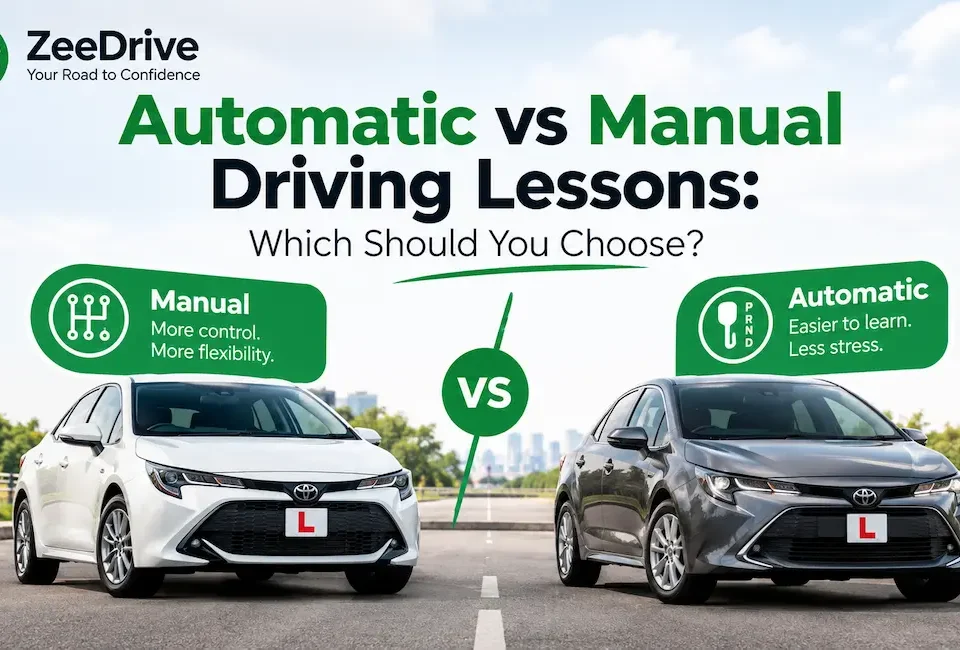
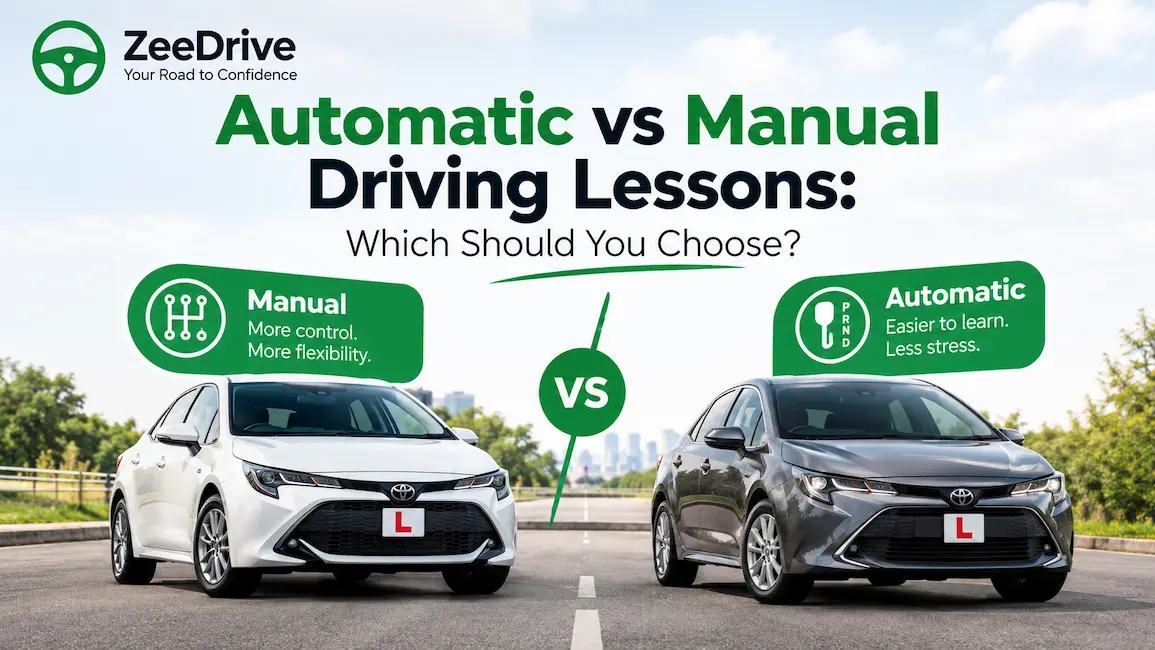
Manual or automatic: Automatic cars take away clutch control and gear changes, so many learners reach test standard sooner. The trade-off is that an automatic pass only lets you drive automatic cars. Still deciding? Read our guide to automatic vs manual driving lessons.
Your confidence and experience: Nervous learners often need more time, and that is completely normal. Drivers who have driven abroad, or who are returning after a long break, often need far fewer hours, mostly to adjust to UK roads and the test standard. Our refresher driving lessons in Oxford are built for exactly that.
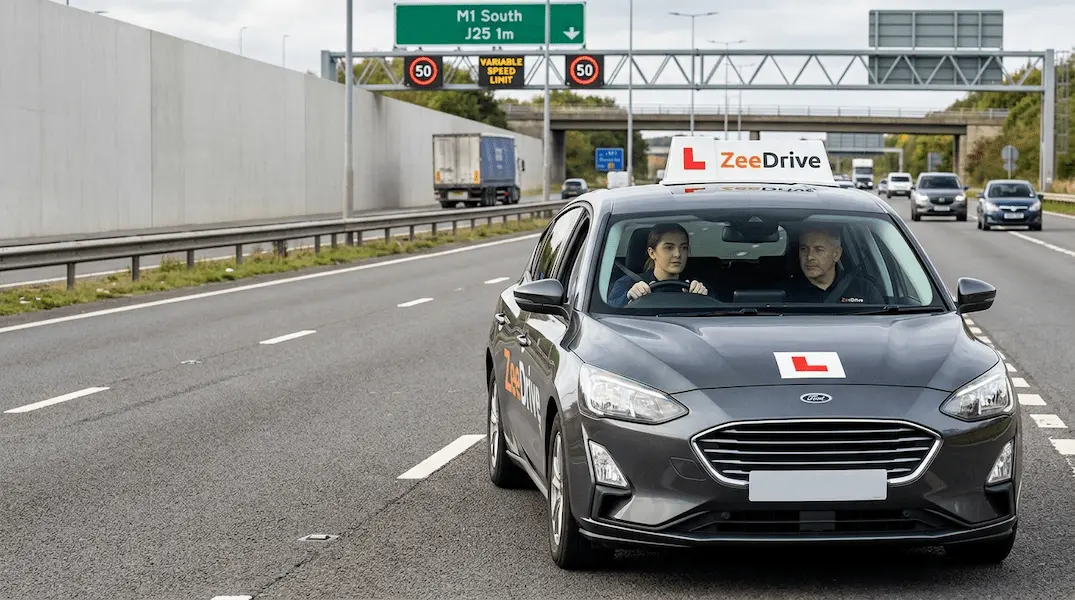
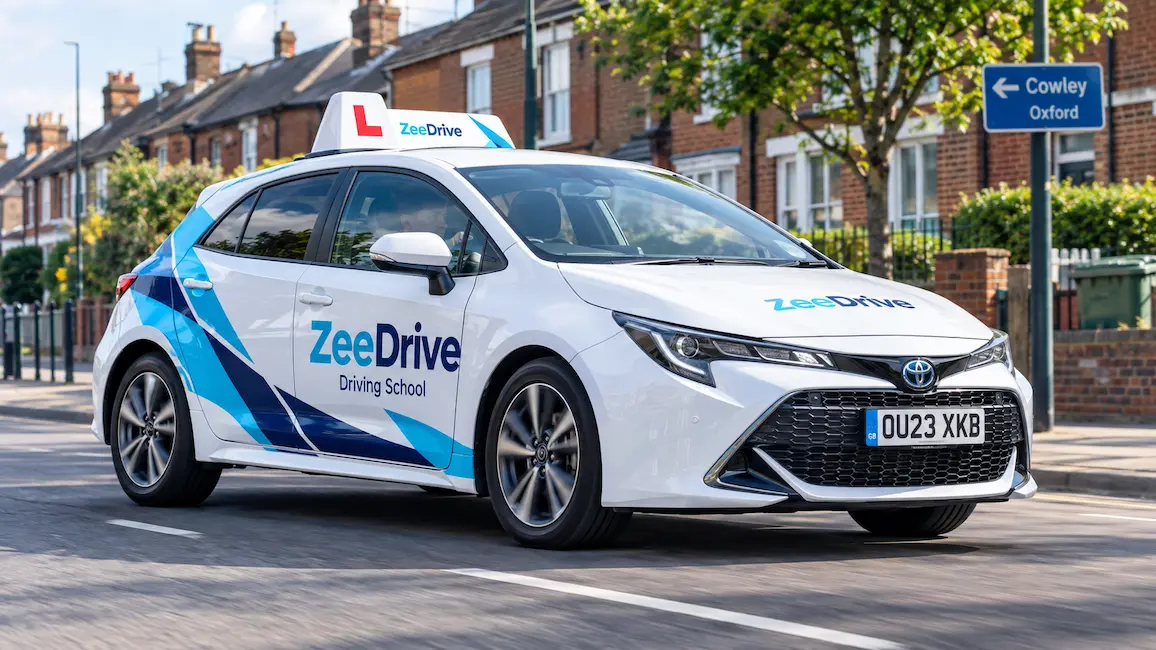
Learning on Oxford’s roads: Oxford is a demanding city to learn in. One drive can take you from the fast dual carriageway of the Eastern Bypass (A4142) to narrow estates and cycle-heavy routes like Cowley Road. Busy roundabouts, bus lanes and commuter traffic all take practice.
Tests from the Oxford (Cowley) driving test centre use exactly these kinds of roads. Learners who practise them during lessons arrive on test day with far fewer surprises.
A rough guide by learner type:
Complete beginner, weekly lessons, little private practice: 45 to 60+ hours. What helps most: adding private practice or a second weekly lesson.
Complete beginner with regular private practice: 30 to 45 hours. What helps most: following your instructor’s practice plan.
Automatic learner: usually towards the lower end of these ranges. What helps most: working on observation and junctions from day one.
Previous experience (abroad or a long break): 10 to 25 hours. What helps most: an assessment lesson to find your gaps.
Nervous learner: often above average. What helps most: short, regular lessons and steady progress.
These ranges are planning estimates, not official DVSA figures. Your instructor can give you a personal estimate after your first lesson.
The fastest learners are not the ones who rush. They are the ones who follow a clear plan and drive regularly. Here is the route we recommend.
-
Get your provisional licence. You can apply from 15 years and 9 months old and start driving at 17. It costs £34 online or £43 by post.
-
Book an assessment lesson. Your instructor will see where you are starting from and give you a realistic estimate of the hours you need.
-
Keep a steady routine. Aim for at least two hours of driving every week. ZeeDrive teaches from 7am to 9pm, seven days a week, with free pickup across Oxford, so lessons can fit around work, school or university.
-
Start your theory revision early. The theory test costs £23 and your pass certificate lasts two years. Hazard perception practice also sharpens your observation on real roads. See our guide to the driving theory test in Oxford.
-
Add private practice when your instructor agrees. Use it to rehearse what you covered in lessons, including night driving and different weather.
-
Book your practical test when you are nearly ready. Since 12 May 2026, you must book your own test on GOV.UK. Your instructor can no longer do it for you. Agree with your instructor that you are ready, and add their reference number so the system checks they are free. Choose a date you can realistically be ready for. You only get two changes per booking. Book at the centre you actually plan to use, such as Oxford (Cowley). You can only move a test to one of the three nearest centres. Cancel at least 10 full working days before the test if you need a full refund.
-
Take a mock test, then pass the real one. A mock test under exam conditions shows whether you are truly ready. On test day, ZeeDrive provides the car and a one-hour warm-up lesson right before your test.
How long will this take? At two hours a week, 40 hours of lessons takes around five months. If you need your licence sooner, an intensive driving course in Oxford packs the same one-to-one tuition into a much shorter timeframe.
Based on 40 hours of lessons, learning to drive with ZeeDrive costs around £1,849 in a manual car and £1,899 in an automatic, including the official licence and test fees. Here is how that total breaks down.
Provisional licence (online): £34 manual, £34 automatic.
Theory test: £23 manual, £23 automatic.
40-hour lesson block at ZeeDrive: £1,600 manual, £1,650 automatic.
Test day package (car plus one-hour warm-up lesson): £130 manual, £130 automatic.
Practical test (weekday): £62 manual, £62 automatic.
Estimated total: £1,849 manual, £1,899 automatic.
Official fees are taken from GOV.UK‘s driving test costs page. A few things can change your total:
-
More or fewer hours. Single lessons cost £45 an hour for manual and £47 for automatic, so 45 hours would add £225 or £235 to the totals above.
-
Your test slot. Evening, weekend and bank holiday tests cost £75 instead of £62.
-
Discounts. Eligible NHS staff and students can ask about our 5% discount.
-
A failed test. You pay the full test fee again to rebook, plus another test day package.
Block booking is the simplest way to cut the hourly rate. A 40-hour block saves £200 on manual and £230 on automatic compared with paying lesson by lesson. Not sure how many hours you need yet? Start with a 10-hour block and top up once your instructor has assessed your progress. See every package on our Oxford driving lesson prices page.
The cheapest lesson is the one you do not need. These habits help learners reach test standard faster.
-
Drive at least twice a week. Short gaps between lessons mean less time spent relearning.
-
Add legal private practice. Use it to repeat what you covered with your instructor, not to learn new skills from scratch.
-
Review every lesson. DVSA’s free driver’s record helps you track all 27 skills, so you and your instructor know exactly what to work on next.
-
Get your theory test done early. Knowing the Highway Code makes every practical lesson more productive.
-
Practise the roads you will be tested on. Around Cowley, that means dual carriageways, multi-lane roundabouts and busy shopping streets.
-
Drive in all conditions. Rush hour, rain and darkness all feel very different, so practise in each before your test.
-
Do not book your test too early. A fail costs another fee, another test day and another wait, and you only get two changes to each booking. Check DVSA’s top 10 reasons for failing the driving test so you know what to avoid.
Is there a minimum number of driving lessons in the UK?
No. DVSA says there is no minimum number of lessons or practice hours. The government ran a consultation on a minimum learning period for learners, which closed on 11 May 2026, but no new rules had been announced at the time of writing.
Does DVSA still recommend 45 hours of driving lessons?
Not any more. DVSA removed its long-standing average of 45 hours of lessons plus 22 hours of private practice from its guidance in early 2026. Many websites still quote it, and it remains a sensible budgeting figure, but DVSA now focuses on whether you consistently reach the top level in all 27 driving skills.
Is 20 hours of driving lessons enough to pass?
It can be for learners with previous experience or plenty of private practice. Most complete beginners need more. The right time to test is when your instructor agrees you are ready and you can pass a mock test, not when you hit a number.
Do you need fewer lessons in an automatic car?
Often, yes. With no clutch or gears to manage, many learners reach test standard sooner. Just remember that passing in an automatic only lets you drive automatic cars. Find out more about our automatic driving lessons in Oxford.
How long does it take to learn to drive in Oxford?
Most learners take several months. At two hours a week, 40 hours of lessons takes around five months, plus time to get a test date. An intensive course can shorten the learning stage considerably.
Can I start driving lessons before I pass my theory test?
Yes. You only need a provisional licence to start lessons. You must pass your theory test before you can book your practical test, so it makes sense to revise alongside your early lessons.
There is no magic number of driving lessons. Most learners need somewhere between 30 and 60 hours, and the fastest route is regular lessons, legal private practice and booking your test only when you are genuinely ready.
The quickest way to get a personal answer is to book a lesson. Your ZeeDrive instructor will assess your driving, explain what to work on and suggest the lesson block that fits your goals.
-
DVSA-approved instructors in manual and automatic cars
-
Free pickup across Littlemore, Cowley, Headington, Garsington and central Oxford
-
Lessons from 7am to 9pm, seven days a week
-
5% discount for NHS staff and students
Book your first lesson online, call us on +44 7703 495727 or message us on WhatsApp.