

Oxford (Cowley) Driving Test Centre 2026: Routes, Pass Rate, Fees, and FAQs
September 26, 2026
Automatic vs Manual Driving Lessons in Abingdon: Which Should You Choose in 2026?
September 29, 2026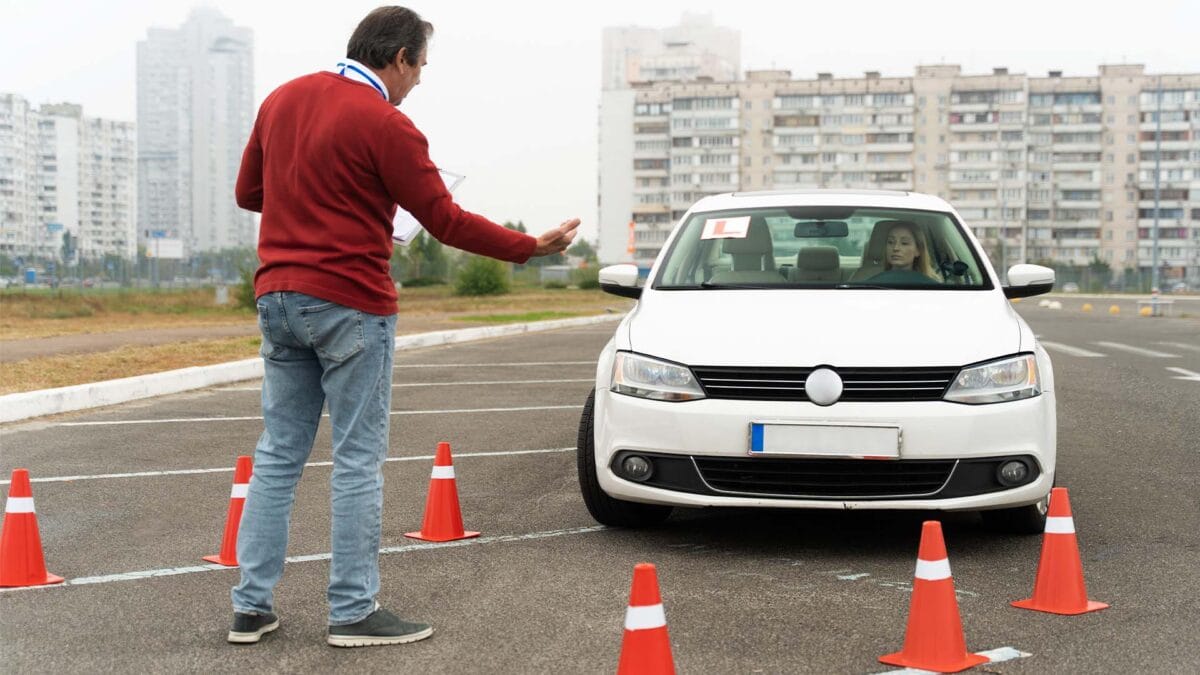
Driving Lessons in Didcot: Your Complete Local Guide to Passing First Time
Did you know the UK national driving test pass rate sits at around 48.7%?
In Didcot, where quiet residential streets quickly turn into fast rural stretches and multi-lane roundabouts, the right preparation makes all the difference. More than half of learners walk away from their first practical test empty-handed simply because they prepared for generic driving situations instead of the actual roads examiners use.
A local instructor who knows the Didcot test routes can save you hours of practice and a failed test fee.
This guide is built specifically for Didcot learners and parents. Unlike national driving school websites that copy and paste generic advice across hundreds of town pages, every tip here reflects the reality of driving in Didcot and surrounding South Oxfordshire.
We cover what driving lessons really cost locally, how to pick a trustworthy ADI-qualified instructor, how to handle the trickiest local junctions, and how to plan your lessons so you show up on test day genuinely test-ready. You will also find practical tools inside, including a quick quiz to pick your best lesson schedule and a local route difficulty breakdown to help structure your private practice.
By the time you finish reading, you will know how to budget without surprises, how to avoid the common faults that fail local candidates, and how to get your full pink licence on the first try.
All pass rate data, local test centre details, and pricing figures in this guide are cross-referenced with official DVSA publications and regional driving school fees, updated as of September 2026. Let's get you on the road safely and efficiently.
Ready to start? Book a 2-hour assessment lesson and get an honest hours estimate — no sales pressure, no long contracts.
Why Choose a Local Didcot Driving Instructor?
Learning to drive is an investment in your independence. While large, national driving franchises might have recognisable logos, they often treat learners like numbers on a spreadsheet.
Choosing an independent, local Didcot driving instructor gives you a distinct advantage from your very first lesson to test day. Here is why local expertise makes all the difference.
1. Intimate Knowledge of Didcot Roads & Test Routes
Driving test success isn't just about knowing how to control a car — it's about knowing the environment where you'll be assessed.
- Familiarity with Examiner Favourites: A local instructor drives Didcot's roads every single day. They know the exact routes used by examiners from nearby centres (such as Oxford Cowley, Newbury, or Reading), including the trickiest multi-lane roundabouts, quiet residential zones, and sudden speed limit transitions.
- Targeted Manoeuvre Practice: Whether it's parallel parking along narrow, car-lined terraced streets or tackling bay parking during peak hours, your training happens in the actual spots examiners frequent.
Expert Tip
Confidence on test day comes from eliminating surprises. Training with an instructor who knows Didcot's road layouts, unusual junctions, and traffic flow patterns gives you a significant practical edge before you even turn the key.
2. Personalised Teaching Tailored to Your Pace
National chains often force instructors to stick to rigid, one-size-fits-all training modules designed for corporate scale, not individual confidence.
- Paced for You: Whether you pick up clutch control in ten minutes or need two dedicated sessions on roundabouts, a local instructor adapts each lesson to your specific learning curve.
- Flexible Booking: Need an early morning pickup before college, an evening slot after work, or a weekend session around family commitments? Independent instructors manage their own diaries directly.
3. High Local Accountability & Community Trust
For national driving schools, an unhappy student is just an anonymous statistic. For an independent local instructor, reputation in the Didcot community is everything.
- Direct Responsibility: Independent instructors rely heavily on word-of-mouth recommendations from friends, siblings, and colleagues across Didcot, Harwell, Steventon, and surrounding villages.
- High First-Time Pass Rates: Because their business thrives on genuine results, local instructors are deeply invested in seeing you pass safely and efficiently on your first attempt.
Local Instructor vs. National Franchise: At a Glance
| Factor | Local Didcot Instructor | National Driving Chain |
|---|---|---|
| Instructor Consistency | Same instructor every lesson; builds a 1-to-1 working rapport | Risk of last-minute substitutes or high instructor turnover |
| Route Familiarity | Daily experience with local Didcot junctions and test circuits | Often generic driving routes outside primary testing zones |
| Booking & Admin | Direct phone/text contact with your instructor | Automated apps, overseas call centres, and rigid rescheduling rules |
| Lesson Focus | Tailored entirely to your weak points and pace | Fixed syllabus checklist regardless of individual strengths |
Real Didcot Passes: What Our Learners Say
"I was nervous about the roundabouts near the A34 and Didcot Parkway, but having an instructor who broke down lane positioning step-by-step made everything click. Passed first time at Oxford Test Centre with only 2 minors after 28 hours of lessons!"
— Liam T., Didcot"Switched from a national school where my instructor cancelled three times. Going local was the best decision — flexible pickups right outside Didcot Sixth Form, clear feedback every week, and passed on my first try."
— Sophie M., Great Western ParkTypes of Driving Lessons Available in Didcot
No two learners share the same schedule, budget, or confidence level. Choosing the right lesson format from day one prevents wasted money and cuts down how long it takes to become test-ready.
Here is a breakdown of the driving lesson options available across Didcot, along with honest advice on who each format suits best.
Interactive Lesson Format Finder Quiz
Not sure which route to take? Answer these four quick questions to find your match:
1. How quickly do you need your licence?
- A) Within 2 to 4 weeks (I have an urgent deadline for work or family).
- B) Over the next 3 to 6 months at a steady pace.
- C) Speed is not my priority; I want to rebuild confidence.
2. How do you feel about coordinating gears and clutch control?
- A) Confident or happy to learn — I want to drive any car.
- B) A bit nervous, but willing to give manual a try.
- C) Anxious or frustrated — I just want to focus on steering and road signs.
3. How much time can you commit each week?
- A) Full days or several consecutive half-days off work or college.
- B) 1.5 to 2 hours every week on a set day.
- C) Ad-hoc 1-hour sessions when my timetable allows.
4. What is your driving background?
- A) Complete beginner, or recently took a test and just need brush-up practice.
- B) Complete beginner starting from zero.
- C) Full licence holder who hasn't driven for months or years.
Your Result:
- Mostly A's: Intensive Course — fastest route to test day, provided your theory test is already booked or passed.
- Mostly B's: Standard Weekly Lessons (Manual) — the most cost-effective and low-pressure way to build lasting habits.
- Mostly C's: Automatic Lessons or Refresher Sessions — removes stall anxiety or gets returning drivers back behind the wheel smoothly.
1. Standard Hourly Lessons (Manual)
Standard lessons remain the most popular choice for Didcot learners. Most students take a single 1.5-hour or 2-hour session once a week.
Taking two hours at a time gives you enough road time to leave central Didcot, practice tricky rural roads through East Hagbourne or Steventon, and still spend twenty minutes on manoeuvres. One-hour lessons often end just as you find your rhythm.
- Best for: Learners balancing lessons with school, college at Didcot Sixth Form, or a regular working week.
- The main advantage: You get time between lessons to reflect on instructor feedback and absorb Highway Code rules.
- Saving tip: Pay via a block booking of 10 hours rather than week-to-week to secure discounted hourly rates.
2. Intensive Driving Courses
Intensive courses condense months of weekly lessons into one to three weeks of daily driving.
You spend 3 to 5 hours in the car each day, quickly progressing from basic car control to mock tests on local Didcot test routes. It is a demanding schedule, both mentally and physically.
- Best for: Learners on a strict deadline for a job, university students home on holiday, or candidates who recently failed a test and need quick rectification before retesting.
- What to watch out for: Make sure you pass your theory test before booking. Without a passed theory certificate, your instructor cannot book your practical test date to match the end of your course.
Intensive training reduces your calendar waiting time, but it does not cut corners on standard safety requirements.
3. Automatic Driving Lessons
Automatic cars have no clutch pedal and cannot stall. That simplicity takes a massive cognitive load off your mind during your first few lessons.
In an automatic car, you focus entirely on steering, observation, road positioning, and speed management. That makes it easier to navigate multi-lane roundabouts around the A34 and Great Western Park without worrying about changing down gears in heavy traffic.
- Best for: Learners who struggle with clutch control, drivers with mobility limitations, or anyone looking to pass in fewer total hours.
- The restriction: Passing in an automatic car gives you a Category B Auto licence. You cannot drive a manual car without taking and passing a manual practical test later.
Expert Tip
Consider automatic lessons if you struggle with clutch control or need to pass quickly. Just remember that your licence will be restricted to automatic vehicles — which is increasingly common now that electric and hybrid cars dominate the market.
4. Pass Plus Course
Your learning does not end the day you tear up your L-plates.
Pass Plus is an official 6-hour training module designed for newly qualified drivers. There is no test at the end; your ADI-qualified instructor signs you off once you achieve the required competence across six core modules:
- Motorway driving (such as the M4 and M40 junctions easily reached from Didcot)
- All-weather driving (handling heavy rain, fog, and ice safely)
- Night driving on unlit country lanes
- Complex town and rural road driving
Completing Pass Plus builds defensive driving habits on high-speed roads and can earn you worthwhile discounts with several major car insurers.
5. Refresher Driving Lessons
Refresher lessons are tailored for people who already hold a full UK licence but feel uncomfortable behind the wheel.
Perhaps you passed years ago and never bought a car. Maybe you recently relocated to Didcot and feel overwhelmed by unfamiliar rural roundabouts and narrow country bends. A short block of refresher lessons — usually 2 to 6 hours — rebuilds your spatial awareness and restores your road confidence.
- Best for: Nervous drivers, returning drivers after a long break, or international licence holders adapting to UK road rules.
- Customised plan: You set the agenda. If you only want to practice parking at the Orchard Centre or merging onto the A34 at Milton Interchange, your instructor focuses entirely on those tasks.
Which Lesson Format Fits You? Quick Decision Guide
| Lesson Type | Typical Schedule | Ideal Candidate | Key Benefit |
|---|---|---|---|
| Standard Weekly | 1.5–2 hours per week | Beginners wanting steady, stress-free progress | Space between sessions to absorb skills and budget gradually |
| Intensive Course | 15–30 hours over 1–3 weeks | Fast-track learners with passed theory test | Cuts months of waiting off your timeline |
| Automatic | 1.5–2 hours per week | Learners anxious about gears and stalling | Faster skill pickup; zero risk of stalling at junctions |
| Pass Plus | 6 hours (often split into 2 sessions) | New drivers with a recent pass certificate | High-speed motorway experience and potential insurance savings |
| Refresher | 2–6 hours total | Full licence holders needing a confidence boost | Targeted practice on specific roads with zero test pressure |
How Much Do Driving Lessons Cost in Didcot?
Budgeting realistically before you start learning eliminates nasty financial surprises halfway through your training.
According to RAC data, the UK average cost for professional driving tuition sits between £35 and £50 per hour. In Didcot and across Oxfordshire, rates generally sit squarely within this range, typically averaging £36 to £42 per hour for manual tuition and £38 to £45 per hour for automatic.
Investing in quality instruction from the beginning always costs less than booking cheap lessons with an inexperienced instructor and failing multiple tests.
Average Hourly Rates: Manual vs. Automatic
Automatic lessons usually carry a slight premium — typically £2 to £4 more per hour than manual lessons.
Automatic training vehicles cost driving instructors more to purchase, maintain, and insure. However, because learners do not need to master clutch bite points and gear selection, many automatic candidates become test-ready in fewer total hours, which balances out the overall investment.
Block Booking Discounts: Your Biggest Saving
Paying lesson by lesson is the most expensive way to learn.
Most independent Didcot instructors offer block booking discounts when you pay for 10 or 20 hours in advance. These packages typically knock 10% to 20% off the standard pay-as-you-go rate.
Expert Tip
Ask your instructor about block booking discounts right away. Paying for a 10-hour block upfront usually saves you between £30 and £60 compared to weekly pay-as-you-go rates — essentially giving you a free lesson across your training journey.
Total Cost Breakdown: Learning to Drive in Didcot
The Driver and Vehicle Standards Agency (DVSA) estimates that the average learner requires roughly 45 hours of professional tuition combined with around 20 hours of private practice to reach test standard.
Here is what a complete, realistic budget looks like from your provisional licence to test day, based on standard 2026 DVSA fees and current local tuition rates:
| Cost Item | Typical Price Range | Details & Timing |
|---|---|---|
| Provisional Licence Application | £34 (online) / £43 (postal) | One-off fee paid directly to the DVLA before starting |
| Professional Lessons (45 Hours) | £1,575 – £2,025 (at £35–£45/hr) | Spread over 4 to 9 months, or discounted via block bookings |
| DVSA Theory Test Fee | £23 | Fixed national fee; must be passed before booking practical |
| DVSA Practical Driving Test Fee | £62 (weekday) or £75 (weekend) | Fixed national fee paid via GOV.UK |
| Instructor Car Hire on Test Day | £70 – £100 | Covers a 1-hour pre-test warm-up, the test itself, and the drive home |
| Estimated Total to Pass First Time | £1,764 – £2,267 | Covers all essential training, official fees, and vehicle hire |
Note: Budget an extra £300 to £500 if you need a retest, which covers the DVSA test fee plus remedial lessons to fix specific faults.
Cut Your Total Costs with Private Practice
You do not need to rely exclusively on paid instructor hours to reach the 45-hour mark.
Supplementing your formal lessons with private practice alongside a parent, partner, or friend dramatically cuts the total number of professional hours you need to buy.
Product Recommendation — Short-Term Learner Driver Insurance. Rather than paying hundreds of pounds to add a learner as a named driver to a family policy, flexible short-term learner policies provide comprehensive cover while protecting the car owner's No Claims Bonus.
Practice Local Basics: Use private practice sessions to build muscle memory — reversing into bays at Didcot retail car parks or repeating simple hill starts in quiet residential roads — saving your instructor's paid time for tricky test-route junctions.
What Factors Influence Driving Lesson Prices in Didcot?
If you see quotes varying across South Oxfordshire, four main factors usually explain the difference:
- Instructor Qualifications: Fully qualified Approved Driving Instructors (ADIs, carrying a green badge) often charge slightly more than trainee instructors (PDIs, carrying a pink badge).
- Transmission: Automatic tuition commands higher vehicle overhead costs.
- Lesson Duration: Two-hour lessons are almost universally more economical per minute than single one-hour sessions because your instructor spends less time commuting between pupils.
- Time of Day: Some schools charge a peak-time premium for weekend or evening slots after 5:00 PM.
How Many Driving Lessons Will I Need?
Most learners ask this question before booking their very first lesson. Having a clear target helps you plan your weekly schedule and budget accurately.
Official figures from the Driver and Vehicle Standards Agency (DVSA) show that the average learner driver takes roughly 45 hours of professional tuition supplemented by 22 hours of private practice before passing the practical driving test.
Use this figure as an honest benchmark, not an absolute rule.
Some learners pass comfortably in 30 to 35 hours, while others benefit from 50 or 60 hours behind the wheel.
What Influences How Quickly You Learn?
- Lesson Frequency & Consistency: Taking regular 2-hour lessons once or twice a week keeps your skills sharp. Leaving long, irregular gaps means spending the first 20 minutes of each lesson re-learning old ground.
- Transmission (Manual vs. Automatic): Automatic learners often reach test standard 10 to 15 hours faster.
- Private Practice Hours: Learners who back up professional lessons with regular private driving progress faster.
- Prior Road Experience: If you already cycle on busy roads or ride a 125cc motorcycle, your road position and hazard perception will be partially developed.
- Anxiety & Confidence Levels: Nervous learners benefit from extra repetitions on complex junctions like the A34 interchanges.
Expert Tip — Start with a 2-hour assessment lesson
A reputable, ADI-qualified instructor will use an initial 2-hour session to evaluate your vehicle control, spatial awareness, and ability to process road instructions. At the end of the drive, they will provide a realistic estimate of the hours you need.
Expert Tip — Back up your lessons with private practice
Combine your instructor sessions with family practice whenever possible. DVSA data confirms that candidates with 45 professional hours plus 20+ hours of supervised private driving achieve the highest first-time pass rates.
Realistic Timelines: Avoid the Rushing Trap
Booking a test date months ahead of time before mastering local roads is the single most common mistake Didcot learners make.
Expert Tip — Do not rush to test before you are test-ready
Taking the test before you can complete an entire mock test without serious or dangerous faults simply wastes the £62 DVSA fee and car hire costs.
Practical Driving Test Centres Near Didcot and Pass Rates
Didcot does not have its own driving test centre.
Local learners sit their practical driving tests at neighbouring regional test centres. Depending on where you live in Didcot and your instructor's usual training routes, you will almost certainly take your test at Oxford (Cowley), Newbury (Hambridge Lane), or Reading.
Understanding the Numbers: National vs Local Pass Rates
The UK national average pass rate sits at approximately 48.7% to 50.0% based on official DVSA test data.
A rural or market-town centre like Newbury often yields higher first-time pass rates than an urban centre like Reading, simply because candidates deal with fewer high-congestion roundabouts and complex multi-lane gyratories. However, a higher statistical pass rate does not mean an "easy" test — rural country lanes carry their own hazards.
Nearby Practical Test Centres at a Glance
| Test Centre | Distance from Didcot | Latest DVSA Pass Rate | Estimated Waiting Time | Notes & Driving Conditions |
|---|---|---|---|---|
| National Average (UK) | N/A | 48.7% | ~14–18 weeks | Standard national baseline across all active DVSA centres |
| Oxford (Cowley) | ~14 miles north | 50.6% | ~6–12 weeks | Top choice for Didcot learners. Features the A4142 Eastern Bypass, Oxford Ring Road roundabouts, and residential estates. |
| Newbury (Hambridge Lane) | ~18 miles south | 59.4% | ~12–18 weeks | Highest regional pass rate. Mixes industrial estate exits, A339 dual carriageways, and winding Berkshire country lanes. |
| Reading | ~22 miles south-east | 48.9% | ~16–22 weeks | Heavy urban traffic, complex multi-lane ring systems, bus lanes, and fast dual carriageways (A33). |
| Swindon | ~27 miles west | 46.6% | ~14–20 weeks | Alternative option if other centres are backlogged. |
Beating the Test Waiting Times: Practical Strategies
- Book Any Available Date at Your Target Centre First: As soon as your instructor confirms you are making steady progress, book the earliest available test slot at Oxford or Newbury through the official GOV.UK driving test booking service.
- Monitor DVSA Cancellation Slots Regularly: Hundreds of candidates move or cancel test appointments every week. Check the official GOV.UK portal early in the morning — particularly on Monday mornings.
- Consider Nearby Alternative Centres Tactically: If Oxford has no suitable slots for months, Newbury or Swindon might have sooner availability. However, never sit a test at a centre you have never driven around.
Expert Tip
Check test centre cancellation slots regularly via the DVSA booking system. Learners who log on early in the morning often spot short-notice slots within days.
Tricky Didcot Driving Areas and Test Route Tips
Didcot offers a diverse mix of driving environments. Within five minutes, you can transition from narrow 20 mph residential streets to high-speed dual carriageways and complex multi-lane junctions.
Roundabouts and Complex Junctions
1. The Milton Interchange (A34 / A4130)
The Milton Interchange is easily the most intimidating junction for local learners. It connects Didcot to the A34, Milton Park, and Steventon through a sprawling, traffic-light-controlled roundabout system.
The Challenge: Traffic moves quickly, lane markings shift across the circulatory carriageway, and selecting the wrong approach lane early forces you into unwanted turns.
How to Tackle It: Read the gantry and lane signs well before the junction. Keep your eyes up to track spiral road markings, maintain a solid central lane position, and check your left mirror thoroughly when spiralling out.
2. Great Western Park Roundabouts
The Challenge: Delivery vans, commuter traffic, and frequent pedestrian crossings right next to entry points create sudden stop-start conditions.
How to Tackle It: Practise early mirror checks and decisive lane discipline. Do not commit into a gap until you are certain traffic on your right is exiting or clear.
3. Jubilee Way & Orchard Centre Access Roundabouts
The Challenge: High pedestrian activity, delivery lorries, and drivers making sudden lane changes across retail exits.
How to Tackle It: Approach at a manageable speed in second gear. Keep your scan wide for pedestrians waiting at zebra crossings.
High-Speed Roads & Dual Carriageways
- The A4130 (Didcot Bypass to Milton): This key link mixes 40 mph, 50 mph, and national speed limit dual carriageway sections. Practise matching the speed of flowing traffic before merging from slip roads.
- Rural B-Roads (Steventon, East Hagbourne, and Blewbury): These roads feature blind bends, tractors, horse riders, and unlit single-track sections. Adapt your speed to the limit of your vision.
Manoeuvres Tested Around Didcot
1. Parallel Parking (Roadside)
- Pull alongside the target car roughly half a metre away, lining up rear axles.
- Check all around (including your right blind spot) before reversing.
- Steer one turn left until the car sits at a 45-degree angle to the kerb.
- Straighten wheels, reverse toward the kerb, then apply full right lock to tuck the front in.
- Finish straight, within a drain's width of the kerb, without clipping it.
2. Bay Parking (Forward or Reverse)
- Forward Bay Park: Swing wide to establish a direct angle, steer firmly into your selected bay, straighten your wheels, and perform 360-degree observations before reversing out safely.
- Reverse Bay Park: Drive two and a half car lengths past the target bay, select reverse, complete all-around blind-spot checks, and reverse slowly on full steering lock.
3. Pulling Up on the Right
- Use your MSM (Mirrors, Signal, Manoeuvre) routine to select a safe space away from bends or driveways.
- Cross smoothly at a shallow angle, stop parallel and close to the right kerb, and secure the car.
- Reverse straight for two car lengths with constant observations, pause if any car approaches, and perform a full six-point check before rejoining traffic.
Didcot Test Route Difficulty Map
| Area / Road | Difficulty | Key Hazard to Watch For | Passing Strategy |
|---|---|---|---|
| Milton Interchange (A34 / A4130) | High | Spiral lanes, fast slip roads, heavy rush-hour traffic | Plan lanes early; don't hesitate to go around if in the wrong lane |
| Didcot Town Centre / Broadway | Medium | 20 mph limits, zebra crossings, bus stops, opening car doors | Maintain 20 mph; keep a 1-metre door buffer past parked cars |
| Ladygrove Estate | Low–Medium | Narrow chicanes, mini-roundabouts, school-run parking | Check mirrors at chicanes; yield correctly at mini-roundabouts |
| A4130 Dual Carriageway | Medium | Speed transitions (30 to 70 mph), slip road merging | Build acceleration on slip roads; stay left unless overtaking |
| East Hagbourne Country Lanes | High | Blind summits, single-track passing points, horse riders | Sound horn on blind bends if necessary; slow to 15 mph for horses |
Local Speed Limits and Road Hazards
- 20 mph Zones: Broad sections of central Didcot, residential streets, and zones near Didcot Girls' School and St Birinus are strictly 20 mph. Accelerating past 23 mph here results in an instant serious fault.
- Speed Transitions on the A4130: Exiting Didcot toward Wallingford or Milton switches rapidly between 30 mph, 40 mph, and national speed limit signs.
Manual vs. Automatic Driving Lessons in Didcot
Choosing between manual and automatic tuition determines the course of your learning and your driving future.
Key Differences
- Manual Lessons: You control the clutch and gear stick. This requires extra coordination on Didcot's hill starts and busy roundabouts, but it grants you a full Category B licence upon passing.
- Automatic Lessons: The car shifts gears on its own. With no clutch pedal, you cannot stall in rush-hour traffic at the Milton Interchange.
Pass Rates and Lesson Timelines
DVSA national test data shows that first-time pass rates for manual driving tests (around 50%) are historically slightly higher than for automatic tests (around 43%).
In reality, most automatic learners need 10 to 15 fewer lesson hours to reach test standard because clutch control and stalling are eliminated.
Long-Term Licence Implications
- An automatic licence limits you legally to driving automatic vehicles only.
- A manual licence covers you for both manual and automatic vehicles with zero restrictions.
With the UK's transition toward electric vehicles and hybrids — which are almost exclusively automatic — the old downside of an automatic licence is shrinking rapidly.
How to Choose the Right Driving Instructor in Didcot
Choosing the right driving instructor is the single most important decision in your driving journey.
1. Check Qualifications: ADI vs PDI
- Green Octagonal Badge (Approved Driving Instructor — ADI): This confirms the instructor has passed all three rigorous DVSA qualifying exams.
- Pink Triangular Badge (Potential Driving Instructor — PDI): This indicates a trainee instructor gaining practical teaching experience.
2. Meet the Instructors: Experience & Teaching Philosophy
Sarah Jenkins — ADI (Grade A)
- Experience: 9 years teaching across Didcot, Wantage, and Abingdon.
- Vehicle: 2024 Ford Fiesta 1.0 EcoBoost (Manual, dual controls).
- Specialism: Nervous learners and advanced roundabout positioning.
Tariq Khan — ADI (Grade A)
- Experience: 12 years coaching pupils through Oxford and Newbury test routes.
- Vehicle: 2025 Toyota Yaris Hybrid (Automatic, dual controls).
- Specialism: Automatic fast-track tuition, rural lane hazard awareness, and eco-driving.
3. Read Reviews with a Critical Eye
Do not just glance at star ratings. Look for reviews that mention specific feedback:
- Do reviewers mention patience and calm guidance, especially during mistakes?
- Does the instructor regularly cover Didcot test routes, rural B-roads, and dual carriageway merging?
- Are there mentions of consistent timekeeping and reliable diary management?
4. Align Teaching Style and Vehicle Choice
- Communication Style: You will spend 30 to 50 hours sitting next to this person. Choose someone whose tone makes you feel calm rather than on edge.
- The Car: Confirm that the tuition vehicle is modern, fitted with working dual controls, well-maintained, and comfortable.
5. Verify Availability and Transparent Pricing
- Diary Consistency: Can they commit to the same weekly 1.5-hour or 2-hour window?
- Transparent Pricing: Check whether they offer block booking discounts (usually 10–20% off) and confirm their cancellation notice policy (standard is 48 hours).
Your Instructor Evaluation Checklist
- DVSA Qualification: Displays an official Green ADI badge in the windscreen
- Local Route Mastery: Confident coaching on the Milton Interchange, A4130, and local test routes
- Verified Reviews: High ratings with specific feedback praising patience and punctuality
- Vehicle Standard: Modern, dual-controlled car suited to your licence preference (manual/auto)
- Diary Fit: A regular weekly lesson slot that reliably works around your schedule
- Assessment Lesson: Offers a 2-hour trial/assessment session before asking for a large upfront block
Book a 2-hour assessment lesson first. It lets you experience their teaching style directly on the road before committing to a full block of tuition.
Preparing for Your Driving Test: Step-by-Step Checklist
1. Master Your Theory Test Early
Do not delay your theory test until you have finished all your practical lessons. Passing your theory early removes a major psychological barrier and unlocks the DVSA practical booking portal.
- Commit to 10–15 Minutes Daily: Consistent micro-sessions beat cramming.
Essential Study Tools:
- The Official DVSA Theory Test Kit App: The primary resource containing all official revision questions and genuine CGI hazard perception clips.
- Driving Test Success (Anytime / 4-in-1 App): Popular revision platforms featuring unlimited mock tests.
- The Highway Code (Latest Edition): The foundational rulebook for all UK road users, available to read free on GOV.UK.
2. Confirm Practical Test Readiness
You are not truly test-ready just because you can steer smoothly. You are test-ready when you can drive for 40 minutes without your instructor needing to prompt, correct, or intervene.
3. Take Realistic Mock Tests
Ask your instructor to run at least one or two complete 40-minute mock tests under strict DVSA conditions.
Expert Tip
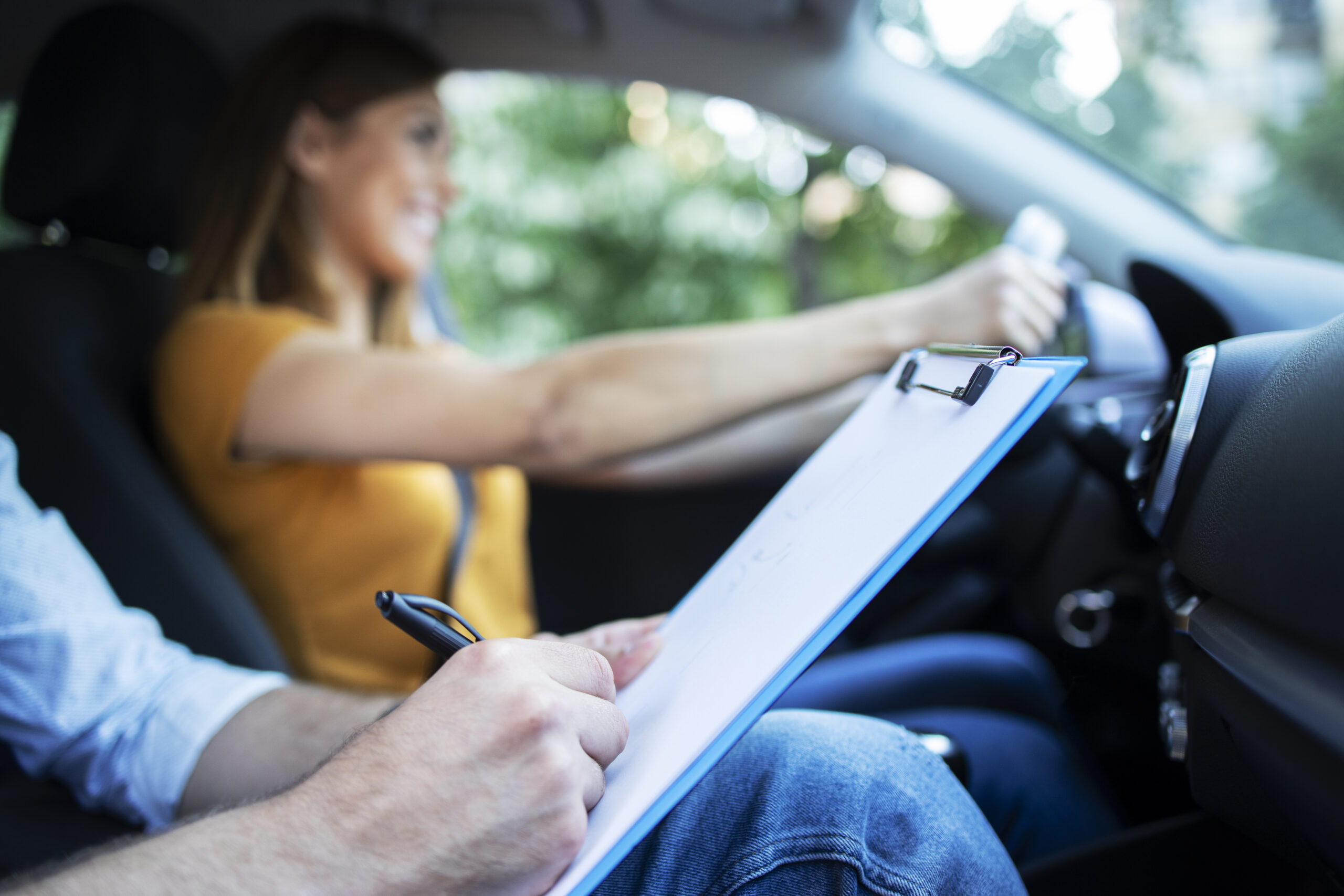
Take at least one mock test with your instructor before test day. Having your instructor sit completely silent with a clipboard simulates the atmosphere of the real test and highlights nerves-related errors.
4. Nail the "Show Me, Tell Me" Safety Questions
- "Tell Me" Question (at the test centre): You explain how you would perform a safety check (e.g., checking tyre tread depth or engine oil levels).
- "Show Me" Question (on the move): You demonstrate an operation while maintaining full control of the car (e.g., clearing the front windscreen, operating the rear demister, or opening and closing a side window).
Expert Tip
Practise the Show Me / Tell Me questions well in advance. Losing marks on simple vehicle safety checks is an easily avoidable mistake.
5. Private Practice Toolkit
- Instructor-Style Auxiliary Convex Mirrors: A secondary interior rearview mirror gives your supervising driver a clear view of following traffic.
- Magnetic L-Plates: High-grip magnetic plates that stay securely attached at dual-carriageway speeds without scratching vehicle paintwork.
6. Test Day Document Checklist
- Valid UK Provisional Photocard Licence: Mandatory ID check by the DVSA examiner
- Theory Test Pass Certificate: Confirms your active theory qualification
- DVSA Test Booking Confirmation Email: Confirms your allocated time, slot, and reference
- Prescription Glasses / Contact Lenses: Required if you need them to pass the 20-metre eyesight check
- A Road-Legal Car with Dual Controls: Your instructor's car (arranged in advance)
7. Test-Day Execution: Keep Calm & Drive Safely
- Arrive 10 Minutes Early: Do not arrive 30 minutes early (which creates unnecessary nervous waiting), but do not cut it close either.
- Treat the Examiner Like a Sat-Nav: They are not trying to catch you out. They simply want to see that you are safe, considerate, and in control.
- Forget Mistakes Immediately: If you stall or make a clumsy gear shift, take a breath, secure the car, restart calmly, and continue.
Frequently Asked Questions (Didcot Driving Lessons)
How long are practical driving test waiting times for Didcot learners?
Waiting times vary between 5 and 20 weeks depending on the test centre you choose. Oxford (Cowley) typically has shorter waiting lists (often 5 to 12 weeks), whereas Newbury and Reading often experience longer queues. You can drastically reduce your wait by using the official DVSA online portal to check for cancellation slots.
Are intensive driving courses available in Didcot?
Yes, many independent Didcot instructors and local driving schools offer semi-intensive and intensive courses ranging from 15 to 30 hours over one to three weeks. You must pass your DVSA theory test before booking an intensive course so your practical test date can be reserved to match the final day of your training.
How do I find an instructor in Didcot with immediate availability?
Because high-quality instructors in Didcot book up weeks in advance, contact local independent ADIs directly rather than applying through generic national booking agencies. Independent instructors control their own diaries and can often accommodate your schedule if you can take mid-week or daytime slots.
What is the driving test pass rate near Didcot?
Didcot candidates taking their test at Oxford (Cowley) face an average pass rate of approximately 50.6%, slightly above the UK national average of 48.7% – 50.0%. Those taking their test at Newbury (Hambridge Lane) benefit from a higher local pass rate of roughly 59.4%.
Can I take my driving lessons and test in an automatic car?
Yes. Automatic lessons are widely available throughout Didcot and surrounding South Oxfordshire villages. Passing your test in an automatic grants you a Category B Auto licence, which restricts you legally to automatic cars.
How much will learning to drive in Didcot cost in total?
Based on the national DVSA average of 45 hours of professional tuition at local rates (£36 to £42 per hour for manual, £38 to £45 for automatic), plus the provisional licence (£34), theory test (£23), practical test (£62), and test-day car hire, the total cost to pass first time ranges between £1,750 and £2,250. Supplementing lessons with private practice and booking block discounts can reduce this total.
Ready to Book Driving Lessons in Didcot?
Book a 2-hour assessment lesson with a DVSA-approved instructor who knows every Didcot test route, rural lane, and tricky roundabout.